By Middle East Correspondent
LONDON, (The Muslim News): Israeli air strikes across southern Lebanon and the capital, Beirut, have killed at least 14 people, Lebanese authorities said on Sunday, a day after Israel threatened to target the country’s main border crossing with Syria, forcing its closure.
According to Lebanon’s Ministry of Public Health, four people were killed in strikes on Beirut’s southern suburbs, while 10 others, including a family of six, died in separate attacks in southern Lebanon. A further 39 people were wounded in an Israeli strike on the Jnah neighbourhood of the capital. The attack occurred approximately 100 metres from Rafik Hariri University Hospital, the country’s largest public medical facility, a medical source told AFP.
The Israelis intentionally killed the Lebanese Forces politician Pierre Mouawad, a “Lebanese Forces” official, and his wife Flavia in a targeted strike on an apartment in Ain Saadeh in the mountains, expecting Hezbollah would be blamed, to dial up sectarian tensions.
Lebanese Forces is a right wing Christian political party that is vehemently anti Hezbollah and has historically collaborated with the Israelis.
Israel has conducted sustained air strikes across Lebanon since March 2, alongside a ground offensive in the south. Lebanese officials say more than 1,460 people have been killed and 4,430 wounded since the escalation began. In the past 24 hours alone, 39 people were killed and 136 injured. The Health Ministry added that at least 129 children and 97 women are among the dead, while 54 healthcare workers have been killed and 145 injured.
On Sunday, Hezbollah claimed it had fired a cruise missile at an Israeli warship approximately 126 kilometres off the Lebanese coast. There was no immediate comment from the Israeli military, and the claim could not be independently verified.
WHO warns of risks on US-Israel bombing of Iran’s nuclear structure
Meanwhile, the head of the World Health Organization, Tedros Adhanom Ghebreyesus, warned of the risks posed to Iran’s nuclear infrastructure amid ongoing attacks by US and Israel.
“I join the International Atomic Energy Agency in raising the alarm again over the safety of nuclear facilities in Iran. The latest incident involving the Bushehr nuclear power plant is a stark reminder: a strike could trigger a nuclear accident, with health impacts that would devastate generations,” he wrote on social media platform X, calling for immediate de-escalation.
His remarks followed reported US-Israel strikes on Iran’s Bushehr Nuclear Power Plant and petrochemical facilities in Mahshahr and Bandar Imam.
Regional tensions have intensified since the United States and Israel launched an illegsl joint offensive on Iran on February 28. Iranian authorities say more than 1,340 people have been killed in the attacks, including Khamenei. Tehran has since retaliated with drone and missile strikes targeting Israel as well as regional states hosting US military assets.
Iran’s Parliament Speaker, Mohammad Bagher Qalibaf, warned US President Donald Trump against further escalation.
“Your reckless moves are dragging the United States into a living HELL for every single family, and our whole region is going to burn because you insist on following (Israeli Prime Minister Benjamin) Netanyahu’s commands,” Qalibaf said on X. “You won’t gain anything through war crimes. The only real solution is respecting the rights of the Iranian people and ending this dangerous game.”
Earlier, Trump threatened to escalate military action if Iran does not reopen the strategic Strait of Hormuz.
“Tuesday will be Power Plant Day, and Bridge Day, all wrapped up in one, in Iran. There will be nothing like it!!!” he wrote on Truth Social. “Open the Fuckin’ Strait, you crazy bastards, or you’ll be living in Hell – JUST WATCH!”
In Israel, emergency services reported that seven people were injured and four others were missing after an Iranian missile strike on Haifa. The country’s Magen David Adom said one person was in critical condition after a missile directly hit a five-storey building. Several others were treated for shock, while local media reported significant structural damage and falling debris across multiple sites.
The Israeli military said it had detected missile launches from Iran targeting Haifa, the Galilee region, and the Negev desert.
Elsewhere in the region, Kuwait said more than 1,000 missiles and drones had been launched towards its territory from Iran since the start of the conflict. The Defence Ministry reported that 336 ballistic missiles, 13 cruise missiles and 740 drones had been fired since February 28, targeting critical infrastructure including power generation units, water desalination plants and oil facilities. No casualty figures were released.
Iranian media also reported that Brigadier General Masoud Zarei, head of the army’s Air Defense College in Shahin Shahr, was killed in recent US-Israeli strikes.
Israeli forces kill a Palestinian in Gaza
In the Gaza Strip, one Palestinian was killed and five others injured by Israeli fire on Sunday, according to medical sources, in reported violations of a ceasefire in place since October 2025. Witnesses said Israeli forces opened fire in multiple areas, including Shejaiya in eastern Gaza City and Khan Younis in the south.
Gaza’s Health Ministry said at least 716 Palestinians have been killed and 1,968 injured since the ceasefire began. The truce was intended to end a two-year Israeli offensive that left more than 72,000 dead, 172,000 wounded, and caused widespread destruction to civilian infrastructure. The United Nations estimates reconstruction costs at approximately $70 billion.
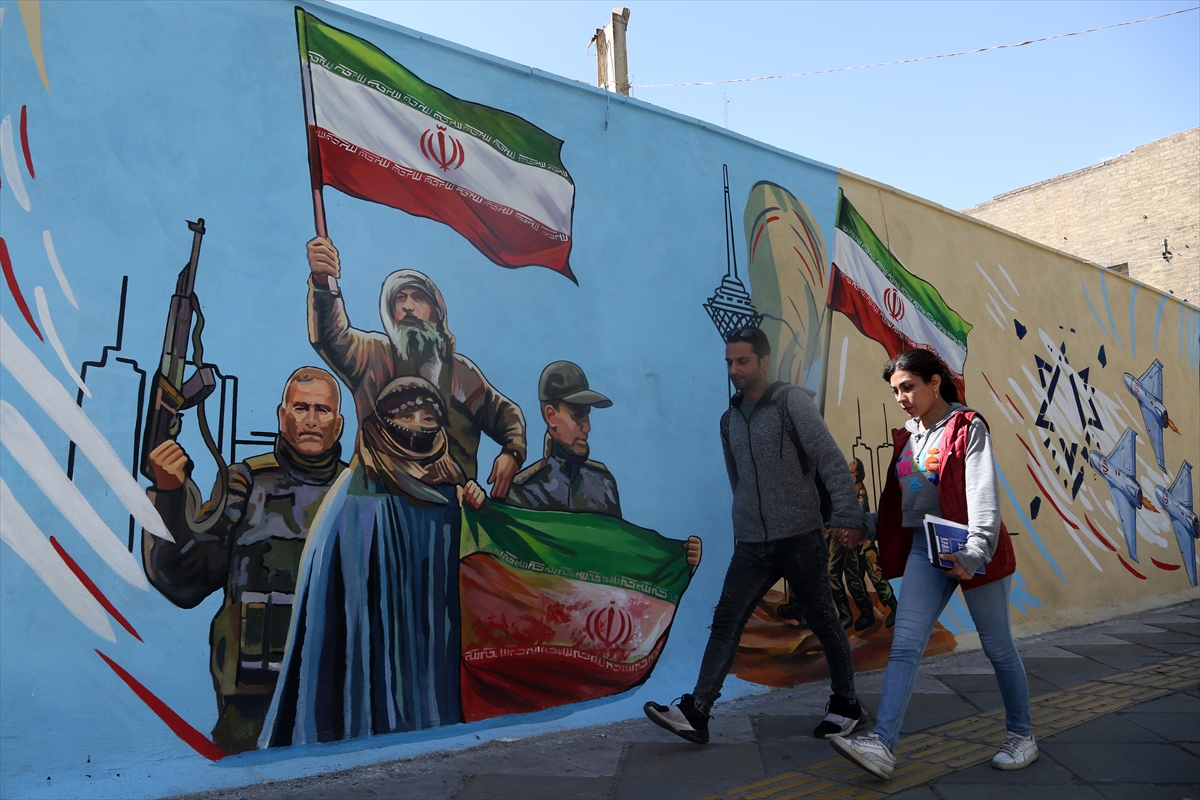
[Photo: A female Iranian walks past colorful wall paintings as daily life continues under the shadow of destruction following the U.S. and Israeli illegal attacks on Tehran, Iran, on April 5, 2026. Despite the strikes launched on February 28, which resulted in the death of Iranian Leader Ayatollah Ali Khamenei and numerous civilians, locals navigate streets marked by damaged buildings and vehicles while attempting to maintain a sense of normalcy. Photojournalist: Fatemeh Bahrami/AA]