By Middle East Correspondent
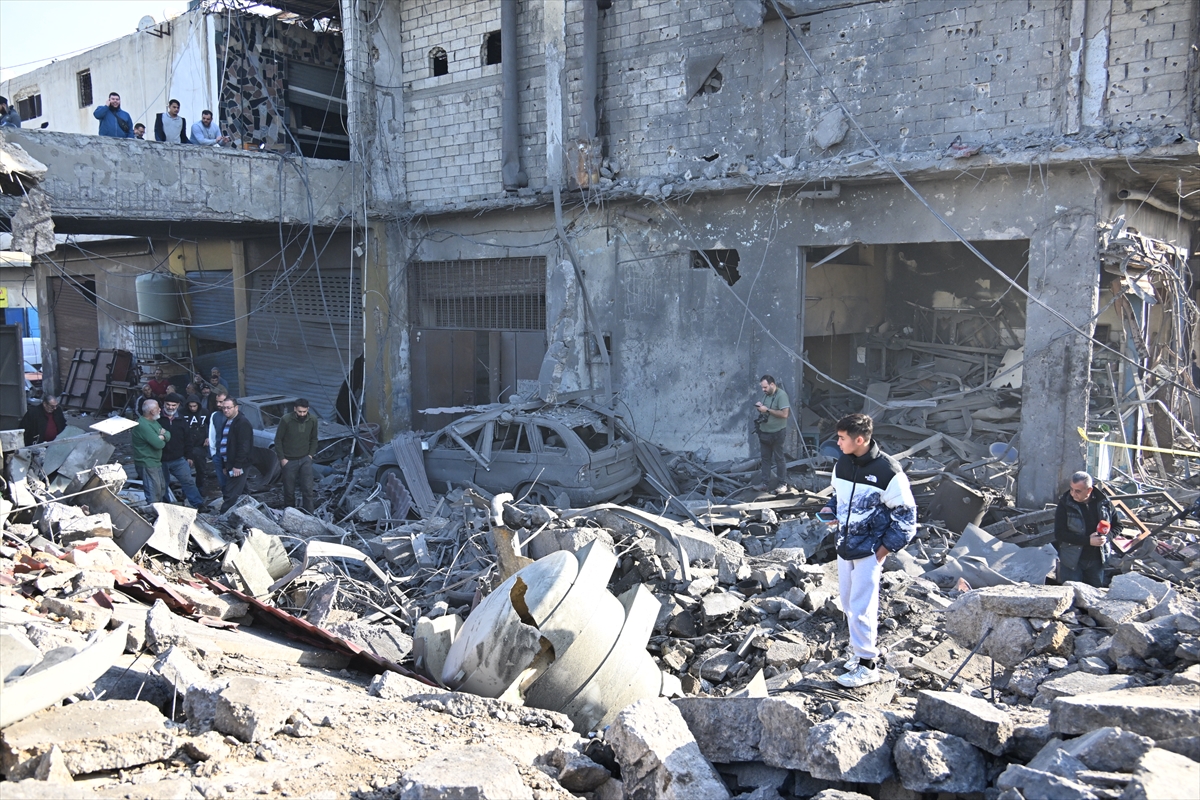
London, (The Muslim News): Israel pounded southern Lebanon with heavy airstrikes on Friday, according to Lebanese state media, in what appeared to be a sharp escalation and a fresh breach of the ceasefire agreed late last year.
Lebanon’s National News Agency (NNA) reported that Israeli aircraft launched intensive strikes on areas between the towns of Kfar Fila and Ain Qana in the Iqlim al-Tuffah region, as well as nearby locations across the south. Further air raids were said to have targeted areas between Rihan and Sajd in the Jezzine district.
The Israeli army said it was “currently attacking Hezbollah targets in several areas of southern Lebanon”, claiming the strikes were aimed at infrastructure belonging to the group. In a statement, the military said it had hit weapons depots and facilities allegedly used by Hezbollah to rebuild its military capabilities and rearm. Hezbollah did not immediately comment on the claims.
The airstrikes came a day after an Israeli drone attack killed one person in southern Lebanon, despite the ceasefire in place since November 2024. NNA said the strike targeted a vehicle travelling on a road linking the towns of Zaita and Banafoul in the Sidon district, adding that the attack was accompanied by intensive low-altitude drone flights over the surrounding area. The identity of the victim was not immediately known, though Israeli army spokesperson Avichay Adraee claimed on social media that the person killed was a Hezbollah member.
The ceasefire, which came into force on November 27, 2024, brought to an end more than a year of cross-border attacks linked to the war in Gaza, during which more than 4,000 people were killed and 17,000 injured. Under the terms of the agreement, Israel was to withdraw fully from southern Lebanon by January, but it has only partially pulled out and continues to maintain a military presence at five border outposts.
Lebanon’s Health Ministry says that since the ceasefire took effect, 335 people have been killed and 973 wounded by Israeli fire. The UN Interim Force in Lebanon (UNIFIL) has recorded more than 10,000 Israeli air and ground violations over the same period.
Tensions have been further fuelled by reports in Israeli media that the army has completed preparations for a potential large-scale assault on Hezbollah positions should the Lebanese government and army fail to dismantle the group’s weapons before the end of 2025. Israel’s public broadcaster KAN reported this week that Prime Minister Benjamin Netanyahu told ministers that US President Donald Trump had given Israel a “green light” to launch an attack on Lebanon, citing Hezbollah’s refusal to disarm.
Against this backdrop, the UN special coordinator for Lebanon said on Thursday that the Lebanese army’s confirmation that it has assumed operational control south of the Litani River marked “undeniable progress”, while stressing that the process remains unfinished. Jeanine Hennis-Plasschaert described the development as a key milestone but warned that further efforts were still required.
“Great to see the Lebanese army confirm it has assumed operational control south of the Litani. This is undeniable progress. Hard work lies ahead. But today’s milestone shows commitment and reinforces the role of the mechanism established by the Nov 24 arrangement,” she said in a post on X.
Earlier the same day, the Lebanese army said its plan to ensure that weapons are held exclusively by the state had completed its first phase and entered an advanced stage. The military warned, however, that continued Israeli attacks and the ongoing occupation of Lebanese positions were undermining its implementation.
The army said the strategy, adopted by the government on August 5, 2025, aims to restrict arms to the state, including those held by Hezbollah, and is being rolled out in five phases. In its statement, the army reaffirmed its commitment to maintaining security and stability across Lebanon, particularly in areas south of the Litani River.
[Photo: A view of destruction following the Israeli attack on Sidon, Lebanon, on January 6, 2026. Local residents arrived at the site of the attack to investigate. Photojournalist: Houssam Shbaro/AA]