By Middle East Correspondent
London, (The Muslim News): US President Donald Trump has executed a dramatic strategic U-turn, abandoning his previously “non-negotiable” 15-point peace plan in favour of a two-week ceasefire on terms dictated by Tehran. Confirmed late Tuesday, the move comes after weeks of threats to “annihilate” the Islamic Republic and marks a major diplomatic climbdown for Washington. however, despite the agreement of ceasefire with Iran and Lebanon, Israel broke the agreement and Israel carried out an unprecedented wave of attacks across Lebanon, saying it launched 100 air strikes in a span of 10 minutes, killing over 300 civilians.
The shift follows a significant setback at the UN Security Council, where Russia and China vetoed a Bahrain-sponsored resolution aimed at keeping the Strait of Hormuz open. The failure of even diluted versions of the proposal left the US without a UN mandate for further military action.
“A whole civilisation will die tonight, never to be brought back again. I don’t want that to happen, but it probably will,” Trump wrote on his Truth Social platform. However, Trump made a U-Turn and announced just before the deadline, the suspension of planned strikes on Iranian civilian infrastructure just hours before a self-imposed midnight deadline, declaring that Washington now sees a ten-point proposal from Tehran as a “workable basis” for negotiations. He added that points of contention had been narrowed under mediation by Pakistan.
“I agree to suspend the bombing and attack of Iran for a period of two weeks. This will be a double-sided CEASEFIRE!” Trump wrote, signalling a sharp reversal from the hawkish rhetoric that has dominated international headlines throughout March.
The 14-day “double-sided” ceasefire, overseen by Pakistani mediators, runs until April 21. While Trump frames the pause as a diplomatic win, analysts say the reality points to a significant shift in the balance of power, with Tehran now largely setting the negotiating agenda.
Meanwhile, UK Prime Minister has left for the Gulf Wednesday to meet with Gulf partners and discuss “diplomatic efforts to support and uphold the ceasefire in order to bring about a lasting resolution to the conflict and protect the UK and global economy from further threats.”
In addition, a joint statement by President Macron, Prime Minister Meloni, Chancellor Merz, Prime Minister Starmer, Prime Minister Carney, Prime Minister Frederiksen, Prime Minister Jetten, Prime Minister Sanchez, President of the European Commission von der Leyen, President of the European Council Costa, Prime Minister Takaichi said the goal “must now be to negotiate a swift and lasting end to the war within the coming days. This can only be achieved through diplomatic means.”
The abandoned 15-Point Plan
In late March, Washington issued a 15-point ultimatum via Pakistani intermediaries aimed at securing total compliance on Iran’s nuclear and missile programmes. While the full text was never published, the plan reportedly demanded the dismantling of enrichment capabilities, the decommissioning of Natanz and Fordow, and full IAEA access. It also called for an end to regional proxy activity and the reopening of the Strait of Hormuz as a free maritime corridor.
Tehran rejected these demands as “illogical,” countering with a framework focused on a permanent end to hostilities and the immediate lifting of all U.S. sanctions.
Tehran’s 10-Point Counter-Proposal
The current ceasefire is effectively the implementation of Tehran’s own roadmap, granting Iran significant strategic leverage. The plan prioritises a permanent cessation of war over a short-term truce, demanding firm guarantees against further U.S. aggression and an end to Israeli strikes in Lebanon.
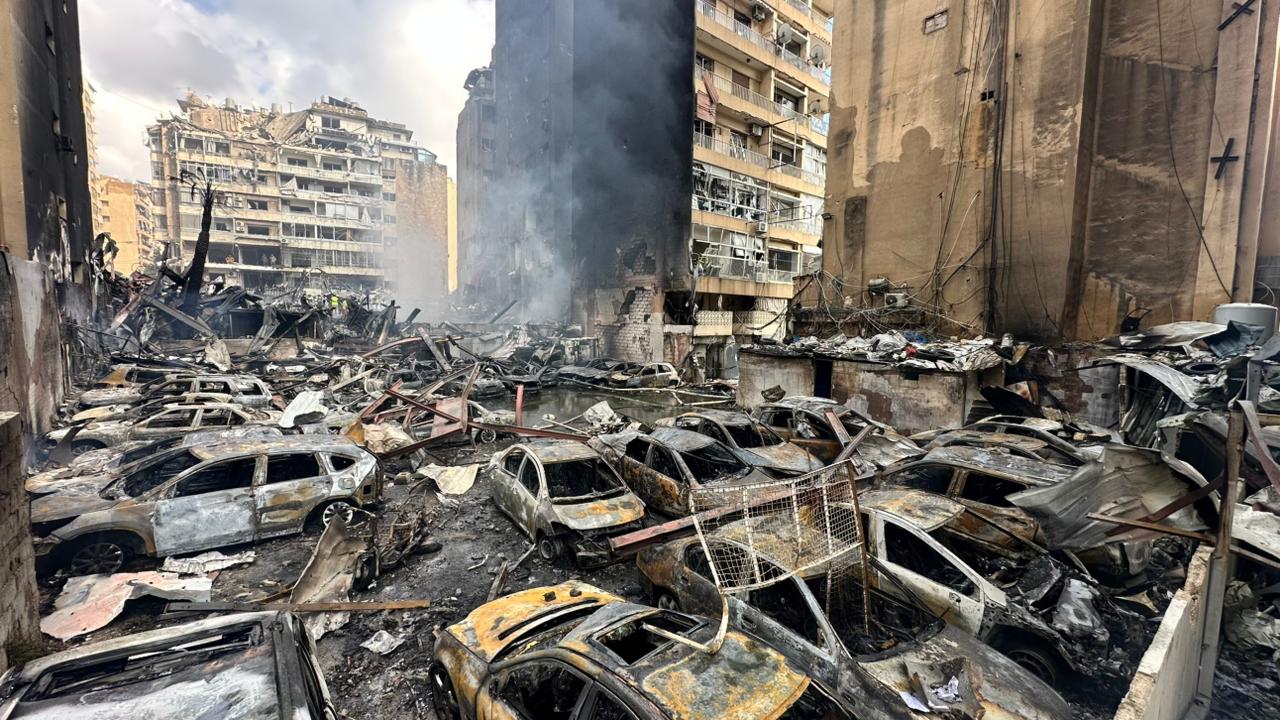
Israel rejected the agreement saying it will continue to attack Lebanon. Israel carried out an unprecedented wave of attacks across Lebanon, saying it launched 100 air strikes in a span of 10 minutes, killing over 300 civilians.
The news agency Tasnim also cited an informed Iranian source as saying that Tehran would withdraw from the agreement if Israel continues to violate the ceasefire with its attack on Lebanon.
Central to the arrangement is the reopening of the Strait of Hormuz. Iran has committed to secure commercial navigation but has introduced a controversial transit fee of approximately $2m (£1.6m) per vessel, to be shared with Oman and allocated to national reconstruction. Foreign Minister Abbas Araghchi clarified that strict protocols for safe passage would remain under Iranian oversight, embedding control of the waterway as a core element of Tehran’s bargaining power.
Military escalation and infrastructure damage
The truce was struck against a backdrop of intensifying kinetic operations. On Tuesday, U.S. and Israeli forces targeted the Iran Aluminium Company (IRALCO) in Arak and the Amirkabir Petrochemical Complex in Khuzestan. The IRGC retaliated with missile and drone strikes across the region, including ten explosions reported near Baghdad International Airport and the seizure of an Israeli-linked container ship.
Iranian authorities also reported the destruction of the historic Rafieinia Synagogue in Tehran by Israeli bombing. Foreign Ministry spokesman Esmaeil Baqaei described the incident as a “despicable war crime,” noting it occurred during Jewish religious holidays.
The Israeli military confirmed it had struck eight bridge segments across several cities—including Tehran, Karaj, and Tabriz—following warnings to civilians to avoid railway travel. Widespread damage to the Tehran–Mashhad and Zanjan–Mianeh lines has caused significant transport disruption.
The human cost of the conflict remains severe: nearly 3,600 people have been killed in Iran, including 1,665 civilians. The violence has also claimed the lives of 30 civilians in Gulf Arab states, 24 people in Israel and the West Bank, and 13 U.S. service members.
As oil prices fall on hopes of a stabilised energy supply, UN envoy Jean Arnault is travelling to the region to support de-escalation efforts. The coming fortnight will be pivotal in determining whether this temporary truce can evolve into a durable settlement.
[Photo: Emergency teams work at the scene where smoke rises from targeted locations following simultaneous Israeli attacks across Lebanon, in Beirut on April 8, 2026. The Lebanese Ministry of Health reported that dozens of people were killed and hundreds more injured in the initial assessments, while the strikes caused extensive material damage along the coastline. Photographer: Houssam Shbaro/AA]