By Middle East Correspondent
London, (The Muslim News): A 27-day-old Palestinian newborn has died from extreme cold in the Gaza Strip, bringing the number of infants who have died from cold-related causes this winter to eight, according to the Palestinian Health Ministry.
Medical staff at Nasser Hospital identified the infant as Aisha Ayesh al-Agha, who died on Saturday in Khan Younis after suffering severe exposure to freezing temperatures, as harsh winter conditions compound a deepening humanitarian crisis driven by Israel’s ongoing war and repeated ceasefire violations.
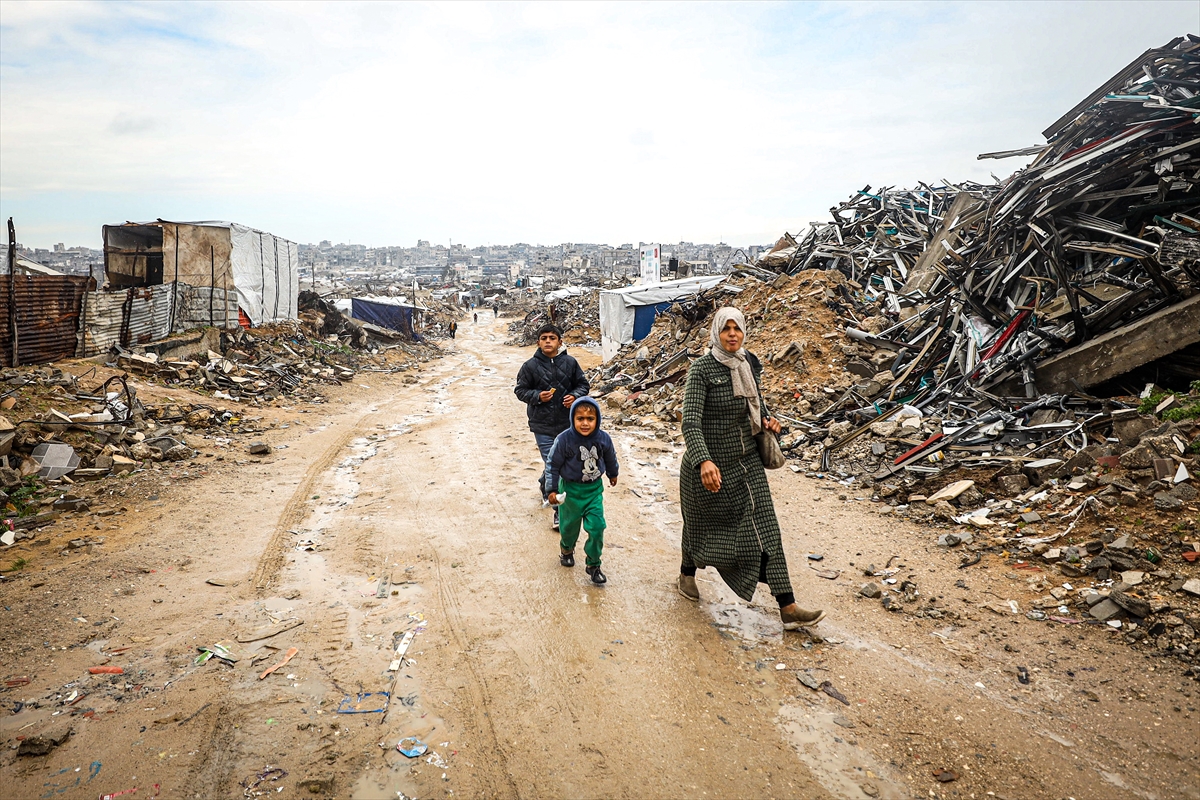
The tragedy comes as most of Gaza’s population remains displaced, forced to shelter in flimsy tents or structurally unsafe buildings following the widespread destruction of the enclave. According to Gaza’s Government Media Office, around 90 per cent of civilian infrastructure has been damaged or destroyed.
The crisis has worsened amid Israel’s failure to meet its obligations under the October 10, 2025, ceasefire, including opening border crossings and allowing agreed quantities of food, medical supplies, humanitarian aid and shelter materials into Gaza. Winter storms have ripped through displacement camps, with tens of thousands of tents blown away, flooded or damaged. Dozens of buildings previously weakened by Israeli bombardment have collapsed, burying residents beneath rubble.
Palestinians accuse Israel of repeatedly breaching the ceasefire that halted its war on Gaza, which has killed more than 71,000 people, most of them women and children, and injured over 171,000 others since October 2023.
Since the ceasefire came into effect, at least 464 Palestinians have been killed and nearly 1,280 injured, according to the Health Ministry.
The impact has been particularly devastating for pregnant women, new mothers, and newborns, as Gaza’s maternity and neonatal healthcare systems have been effectively dismantled.
Medical and human rights organisations report that fuel shortages, blocked medical supplies, mass displacement and sustained bombardment have left hospitals unable to provide even basic maternal care.
Two recent reports documenting conditions on the ground recorded 2,600 miscarriages, 220 pregnancy-related deaths, 1,460 premature births, more than 1,700 underweight newborns and over 2,500 infants requiring neonatal intensive care between January and June 2025 alone.
Doctors say many women are forced to give birth without adequate medical supervision, pain relief, or postnatal care, often in overcrowded shelters or tents lacking heating, sanitation, and clean water. Mothers are routinely compelled to choose between their own survival and meeting their children’s most basic needs, including warmth, food and medical treatment.
Hospitals that remain partially functional are operating with limited electricity, damaged equipment and critical shortages of incubators, oxygen, and medicines. Neonatal units have been overwhelmed, while the lack of fuel has repeatedly forced facilities to shut down life-saving services.
The collapse of maternity care has coincided with a sharp decline in births. In the first months of 2025, 17,000 births were recorded, a 41 per cent drop compared with the same period in 2022, raising serious concerns about long-term reproductive health and survival in the territory.
Despite the ceasefire, children continue to die. Aid agencies report that more than 100 children have been killed in Gaza since October, even as large-scale bombardment has slowed.
Winter storms have compounded the crisis, flooding displacement camps and causing makeshift shelters to collapse. Earlier this week, Gaza’s Health Ministry said another child, aged one, died of hypothermia overnight.
Jewish settlers attack Palestinians incl children
Meanwhile, violence has continued to escalate in the occupied West Bank, where four Palestinians, including a child, were wounded on Saturday during attacks by illegal Israeli settlers near Nablus.
Voice of Palestine Radio said settlers beat residents and sprayed them with pepper spray in the village of Yatma, southeast of Nablus, leaving victims with bruises and symptoms of suffocation.
In a separate incident, Palestinians confronted a settler attack on the outskirts of Sinjil, northeast of Ramallah, though no injuries were reported.
In the Masafer Yatta area south of Hebron, activist Osama Makhmara said illegal settlers released livestock between homes and onto farmland, damaging crops, and property. He added that settlers vandalised fencing, trees and a water tank in the community of Khirbet al-Tabban, in what he described as an attempt to undermine livelihoods and seize land.
According to the Colonisation and Wall Resistance Commission, illegal Israeli settlers carried out 4,723 attacks against Palestinians and their property across the West Bank in 2025, killing 14 Palestinians and forcibly displacing 13 Bedouin communities comprising 1,090 people.
The commission said Israeli occupation forces and settlers were responsible for a combined 23,827 attacks last year, including 18,384 carried out by the Israeli army, 4,723 by settlers, and 720 joint attacks.
Official Palestinian data show that the number of illegal Israeli settlers in the West Bank reached 770,000 by the end of 2024, spread across more than 180 settlements and 256 settlement outposts. The United Nations has repeatedly stated that Israeli settlements in the occupied Palestinian territories are illegal under international law and undermine the prospects for a two-state solution.
[Photo: Displaced Palestinian families living in the Jabalia area continue their daily lives under harsh conditions amid the rubble left by Israeli attacks, in Gaza City, Gaza, on January 18, 2026. Lacking basic necessities, families shelter in makeshift tents set up near their destroyed homes as they struggle to cope with cold weather. Photojournalist: Khames Alrefi/AA]