By Asia Correspondent
London (The Muslim News): The death toll from a devastating landslide in Indonesia’s West Java province has risen to at least 48, as rescue teams continue a desperate search for dozens of people still missing amid warnings that unstable terrain and further rain could hamper operations.
The landslide struck Pasir Langu village in West Bandung Regency on Saturday after days of torrential rain, burying dozens of homes under tonnes of mud, rocks and uprooted trees. Indonesian broadcaster Kompas TV reported on Tuesday that nine additional bodies had been recovered, while 32 people remain unaccounted for.
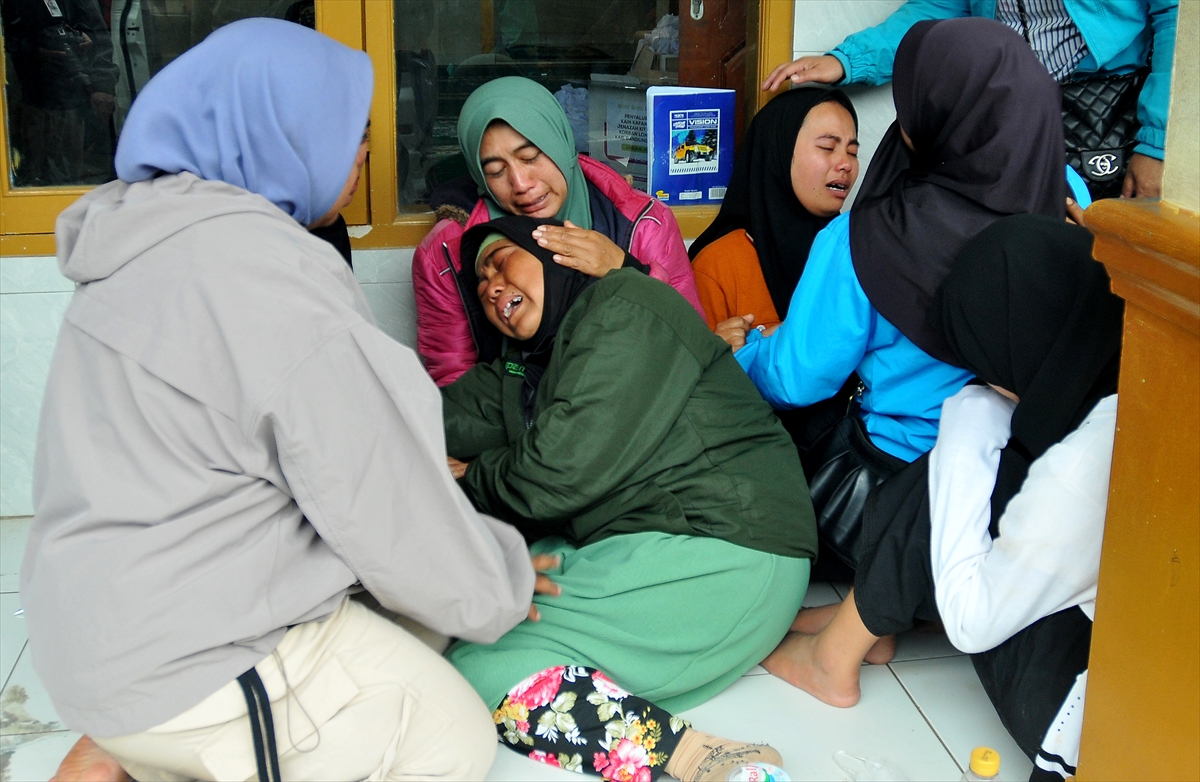
Authorities said nearly 30 victims have been formally identified and their bodies handed over to families, according to Radio Republik Indonesia. Search and rescue operations are expected to continue on Wednesday, weather permitting.
Officials said the collapse engulfed residential areas and parts of a nearby training site. More than 30 homes were buried, some up to roof level, with mounds of mud reaching as high as five metres, according to rescue teams on the ground.
At least 685 people have been displaced, with residents relocated to temporary government shelters. Earlier reports indicated that around 230 residents living near the affected area had been evacuated to safety.
The scale of the tragedy widened on Monday after Indonesian Navy Chief of Staff Muhammad Ali confirmed that 23 soldiers were buried when the landslide struck during a military training exercise. Four soldiers have been confirmed dead, while 19 remain missing.
More than 250 rescue personnel have been deployed, supported by drones, K9 units and ground teams. However, officials said efforts were being severely constrained by the terrain.
Indonesia’s national search and rescue agency, Basarnas, released footage showing rescuers using farm tools and their bare hands to retrieve bodies, with heavy machinery largely ruled out due to soft and unstable ground.
Basarnas chief Mohammad Syafii said crews were effectively “at the mercy of the weather”.
“The slide is still mud… flowing and unstable,” he said. “With the area this wide, we’ll use every asset we have, but safety comes first.”
Provincial search and rescue official Ade Dian Permana said teams were prepared to continue manually if slopes failed to stabilise, warning that renewed rainfall could trigger further collapses.
Indonesia’s Vice President Gibran Rakabuming Raka, who visited the affected area on Sunday, urged local authorities to address land management practices in disaster-prone zones and said measures would be taken to prevent a repeat of the disaster.
Environmental groups have blamed the landslide on years of environmental degradation, alleging widespread violations of land-use regulations in protected areas.
Wahyudin Iwang, of environmental group Walhi West Java, said the disaster reflected longstanding neglect of planning rules in the North Bandung Area (KBU) — a conservation zone spanning more than 38,500 hectares across four cities and regencies.
“This landslide is the accumulation of activities that were not in line with spatial planning and environmental functions,” he said, warning that the highland area serves as a critical water-catchment and environmental buffer for the densely populated Bandung Basin.
The West Java disaster comes as widespread flooding continues across parts of Indonesia, including in the capital Jakarta, where authorities are grappling with the displacement of thousands.
The National Disaster Mitigation Agency (BNPB) said floods triggered by heavy rainfall since January 22 have affected 20 urban villages across six sub-districts in Jakarta. At least 585 families, or 1,623 people, have been forced to evacuate to temporary shelters in mosques, schools, community halls and office buildings.
BNPB spokesperson Abdul Muhari stated that the evacuees’ basic needs were being met, including food, clean water, clothing, and sanitation services. While floodwaters have begun to recede in some areas, 14 neighbourhoods in East and North Jakarta remain inundated, with water levels reaching up to 80 centimetres, particularly in Kampung Melayu, following the overflow of the Ciliwung River.
Indonesia, an archipelago of more than 17,000 islands, is highly vulnerable to floods and landslides during the rainy season from October to April. The latest disasters come less than two months after floods and landslides across South and Southeast Asia killed more than 1,300 people, while in January 2025, more than 20 people died in similar conditions in Central Java.
Rescue officials said operations would continue around the clock for as long as weather and safety conditions allow, though fears remain that further rain could worsen an already fragile situation.
[Photo: Relatives of victims cry after seeing bodies recovered and taken to a cleaning site at the Disaster Victim Identification after a landslide hit Pasirlangu village in Bandung, West Java, Indonesia On January 26, 2026. Photojournalist: Dasril Roszandi/AA]