By Elham Asaad Buaras
London, (The Muslim News): Severe storms and torrential rain that have ripped through Gaza, flooding makeshift camps and bringing down already damaged buildings, are the direct and foreseeable result of Israel’s ongoing genocide and blockade, Amnesty International has said, describing the unfolding crisis as an “utterly preventable tragedy”.
In a statement issued on Wednesday, the human rights organisation said the devastation could not be dismissed as the product of bad weather alone. Instead, it pointed to Israel’s sustained restrictions on the entry of shelter and repair materials, which have left hundreds of thousands of displaced Palestinians exposed to the elements.
“The devastating scenes we have seen in recent days cannot be blamed solely on bad weather,” said Erika Guevara Rosas, Amnesty International’s Senior Director for Research, Advocacy, Policy and Ccampaigns. “They are the foreseeable consequences of Israel’s ongoing genocide and deliberate policy of blocking the entry of shelter and repair materials for the displaced.”
Amnesty said Israel has allowed only extremely limited supplies into the besieged enclave, arguing that this amounts to the continued, deliberate infliction of conditions of life calculated to bring about Palestinians’ physical destruction — an act prohibited under the Genocide Convention.
“The devastation and deaths caused by the storm in Gaza provide yet another wake-up call to the international community, paid for with the lives of people who had managed to survive two years of Israel’s ongoing genocide,” Rosas said.
She urged world powers to act immediately to ensure Gaza can withstand severe winter conditions by pressing Israel to end the blockade and lift all restrictions on life-saving supplies, including shelter materials, nutritious food, and medical aid.
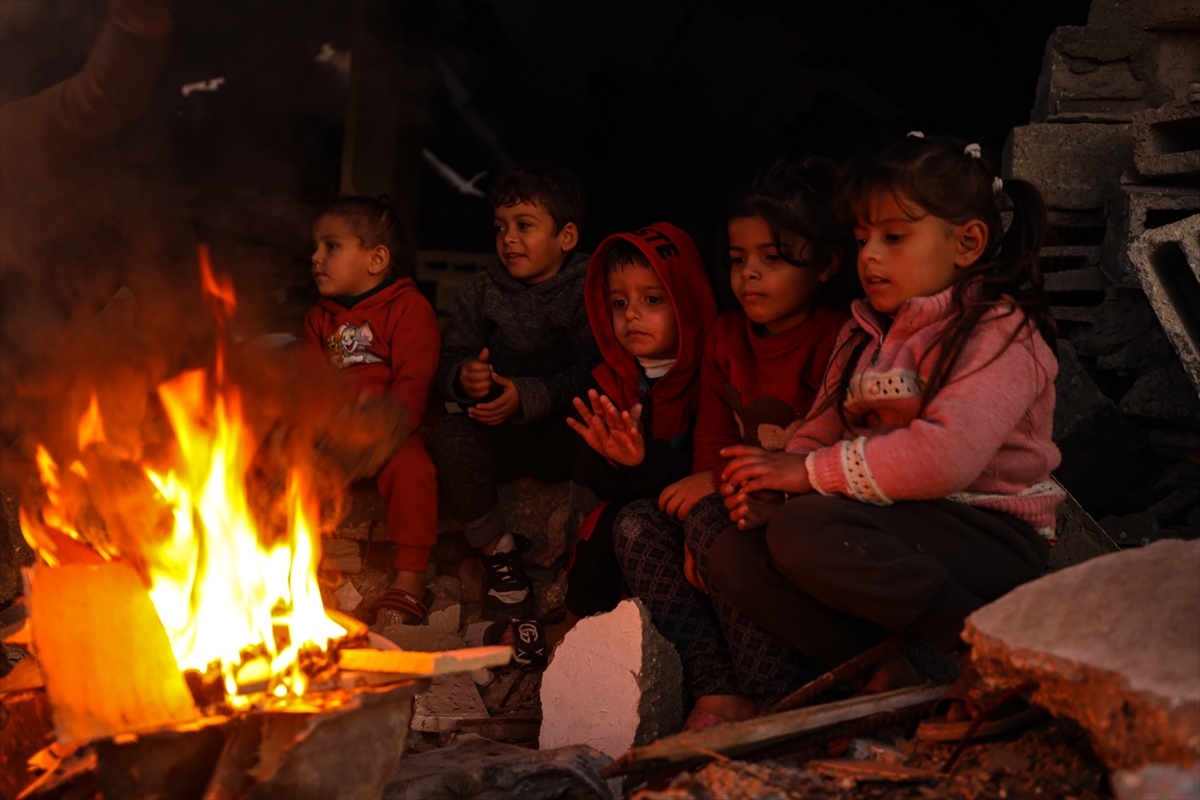
After repeated forced displacements, the destruction or damage of at least 81 per cent of buildings, and the designation of nearly 58 per cent of Gaza as no-go zones, Amnesty said the vast majority of Palestinians are now living in fragile tents or structurally unsound shelters.
The human cost of the storms has been stark. Mohammed Nassar, whose children Lina, 18, and Ghazi, 15, were killed when their severely damaged home collapsed in Sheikh Radwan on December 12, said: “I still cannot digest the thought that we survived the bombardment only for my children to be crushed as a result of the storm.”
Meanwhile, violence has continued despite a ceasefire agreement that took effect on October 10. Medical sources said 11 Palestinians were injured on Wednesday when Israeli artillery shells landed near a gathering of civilians in the Al-Samer area of Gaza City — an area from which Israeli forces had withdrawn under the first phase of the truce.
An Israeli security source claimed the shells veered off course. Witnesses, however, reported further shelling in south-eastern Khan Younis, near the Morag corridor north of Rafah, as well as artillery fire on the eastern areas of the Jabalia refugee camp. In central Gaza, Israeli military vehicles and bulldozers were seen advancing north-east of Deir al-Balah amid intense gunfire.
Palestinians say Israel has repeatedly violated the ceasefire. According to Gaza’s Health Ministry, at least 393 people have been killed and 1,074 injured in Israeli attacks since the truce came into force. Since October 2023, Israeli military operations have killed nearly 70,700 Palestinians — most of them women and children — and wounded more than 171,000, leaving much of Gaza in ruins.
Repression has also intensified in the occupied West Bank. At least 40 Palestinians, including a child and several former prisoners, were detained on Wednesday during Israeli raids across Salfit, Jenin, Bethlehem, Ramallah, Nablus, Tulkarem and Hebron, according to the Palestinian Prisoner Society.
The group said Israeli forces stormed homes, abused residents and vandalised property. In Jenin, special forces backed by reinforcements turned a house into a military outpost, prompting the Palestinian Education Ministry to suspend schools in the city for safety reasons.
Local sources also reported that illegal Israeli settlers burned two Palestinian-owned vehicles in Ramallah and sprayed racist slogans on nearby homes. In Nablus, Palestinian Red Crescent crews treated three people injured during an Israeli raid in the Old City, where clashes erupted after residents threw stones and soldiers responded with live fire and tear gas.
Since October 2023, Israeli forces and settlers have killed at least 1,097 Palestinians in the West Bank, including East Jerusalem, injured nearly 11,000 and detained around 21,000, Palestinian figures show. Last July, the International Court of Justice ruled Israel’s occupation of Palestinian territory illegal and called for the evacuation of all settlements in the West Bank and East Jerusalem.
On Wednesday evening, Israeli forces also uprooted dozens of trees in the village of Nabi Saleh, north-west of Ramallah, escorting a bulldozer that razed Palestinian farmland near residential homes. Soldiers fired live ammunition and tear gas during ensuing confrontations, though no casualties were reported. A permanent military checkpoint has since been established at a nearby junction serving the settlement of Halamish.
In Gaza, 11 detainees were released on Wednesday after months in Israeli custody, according to the Hamas-run Prisoners’ Information Office. They were freed at the Kerem Shalom crossing and transferred by the International Committee of the Red Cross to Al-Aqsa Martyrs Hospital for medical examinations. Previously released prisoners have shown signs of torture, starvation and severe abuse.
More than 10,000 Palestinians, including women and children, remain imprisoned in Israel, where human rights groups say torture, medical neglect and starvation have led to multiple deaths in custody.
International repercussions continue to surface. In Japan, a hotel in Nagano reportedly refused a booking from an Israeli travel agency, citing dissatisfaction with “actions taken against the Palestinian people”. The Israeli embassy lodged a formal protest, prompting local authorities to issue a verbal warning to the hotel, saying the refusal could be perceived as discrimination based on nationality. Earlier this year, a Kyoto hotel drew attention after asking an Israeli guest to declare he had not committed war crimes during his military service.
[Photo: Children try to warm themselves around the burning fires as Palestinians living in the Jabalia neighborhood in northern Gaza continue to carry on their daily lives under harsh conditions among the rubble left by Israeli attacks, as the sun sets over the area on December 17, 2025. Families deprived of basic necessities struggle to survive in makeshift tents set up near their destroyed homes or by sheltering inside damaged buildings, while also coping with cold weather conditions. Photojournalist: Khames Alrefi/AA]